
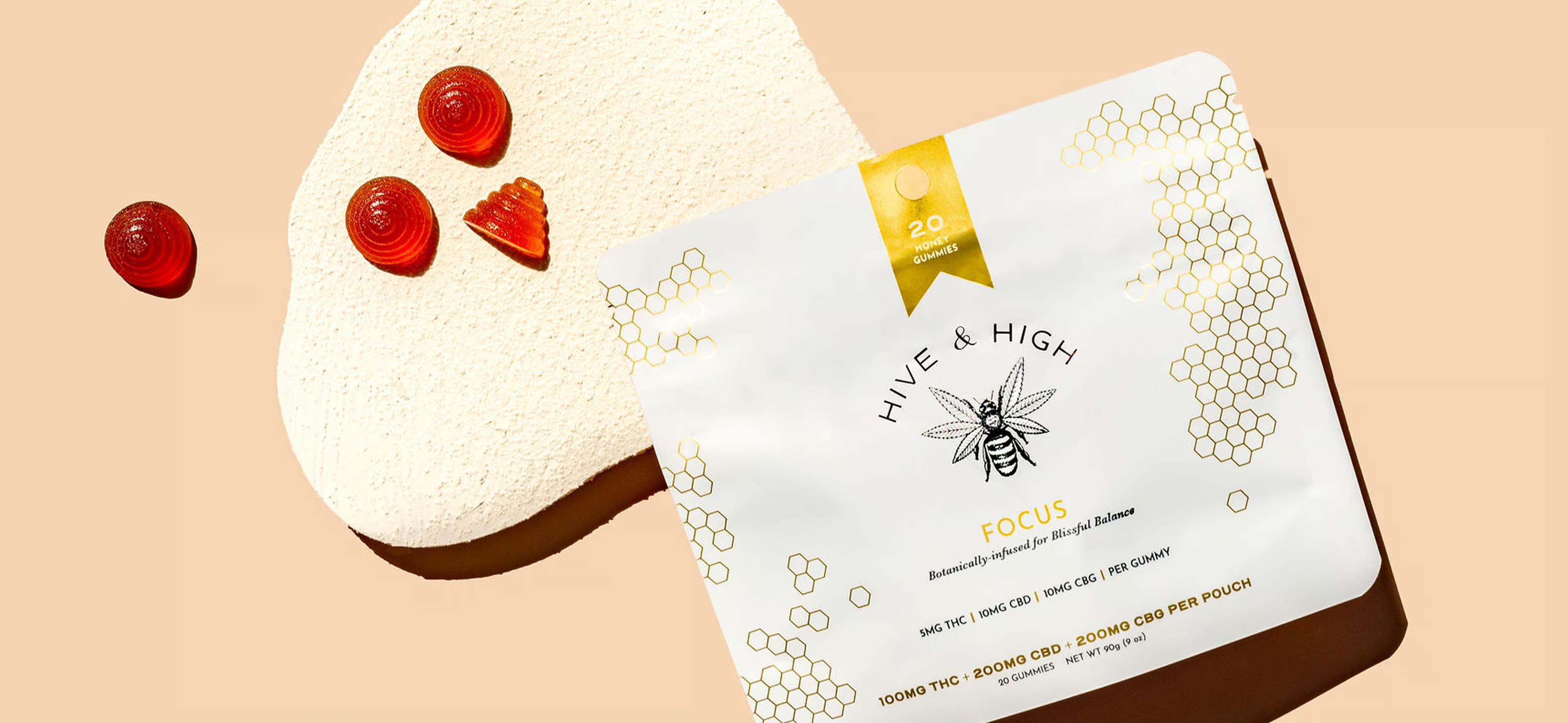
If you’re building or scaling a hemp-derived product—whether it’s a THC-infused seltzer, CBD tincture, gummy, or topical — there’s one part of your launch that can quietly tank your entire business if you don’t get it right: packaging compliance.
Unlike traditional consumer packaged goods, hemp-derived THC products exist in a complex legal gray area — and getting murkier by the day. The federal government may say hemp is legal under 0.3% THC, but individual states enforce wildly different packaging, labeling, and marketing requirements.
We’ve distilled the most rigorous packaging regulations from the five strictest states — New York, California, Colorado, Oregon, and Minnesota — into a single, easy-to-follow checklist to help founders, designers, and operators avoid the headaches (and potential legal issues).
We use this as our own gold standard — a proactive, no-shortcuts checklist for any brand serious about national-scale compliance. Get the details below to skip to this section to get the TLDR.
✅ Core Requirements:
Child-Resistant Packaging
Packaging must meet federal child-resistance standards such as ASTM D3475 or PPPA. This means it must be significantly difficult for children under five years old to open, but easy for adults to use properly.
Tamper-Evident Seals
All products must include an indicator or barrier to entry (a seal, perforation, shrink wrap, or blister) that shows whether the product has been opened. Once opened, it should be obvious.
Opaque Packaging (when required)
Any edible, beverage, tincture, or capsule product that could be mistaken for food must be housed in opaque or light-blocking packaging. This is mandatory in CA, NY, and MN, especially when products resemble candy or snacks.
Resealability
For multi-serving products like gummies, tinctures, or beverages, packaging must be resealable to preserve child resistance after opening. Think: press-to-close zippers, click caps, and CR-certified jars.
Material Restrictions & Sustainability
In California and Oregon, packaging must be recyclable or compostable whenever feasible. California AB 1201 also prohibits certain PFAS and plastic additives, and some counties layer in stricter rules.
Avoid polystyrene, PVC, and multi-layer laminates when possible.
Barrier Protection
Packaging must adequately protect contents from light, oxygen, and moisture. UV-resistant mylar, glass, and lined aluminum are recommended for flower and tinctures.
No Easy Access or Reuse Loopholes
Avoid packaging styles that can be re-closed without visible signs of tampering (e.g., screw-top jars without seals). Also, single-use sachets must be tear-resistant and hard to access by squeezing.
✅ Core Labeling Requirements:
Product Identity
Clearly state the nature of the product: “Hemp-Derived THC Beverage,” “CBD Sleep Gummies,” etc.
In New York, this must be on the front in minimum 12pt font.
Net Contents
Must be expressed in metric units (mg, mL, g). Dual listing with U.S. customary (e.g., ounces) is allowed, but not required.
Total THC + CBD
Both per serving and per package amounts are required. In California and New York, this must be bolded, at least 10pt font, and located on the PDP (front panel).
All Other Cannabinoids
CBG, CBN, THCV, etc. should be listed by weight per serving, especially if referenced in marketing or claims.
Universal Symbols
California requires the CA cannabis warning symbol on any product containing THC. Colorado requires a “Contains THC” triangle symbol for edibles/topicals. Oregon mandates a “HEMP” leaf symbol for any detectable THC products. In all instances, check with your local laws on any state-specific warning symbols that need to be added to your packaging.
Warning Statements (in exact language)
Most states require the following to be bold, capitalized, and in at least 10pt sans serif font: KEEP OUT OF REACH OF CHILDREN. FOR ADULT USE ONLY. THIS PRODUCT MAY CAUSE INTOXICATION. DO NOT DRIVE OR OPERATE MACHINERY AFTER USE. But then you have some states with specific requirements like Minnesota, who also requires “Do not consume more than Xmg THC per 24-hour period” in addition to their specific warning statement.
QR Code or Direct COA Link
Required in MN, NY, CO, and often recommended elsewhere so we add this everywhere: a link to a third-party lab Certificate of Analysis that verifies batch potency and contaminants.
Batch/Lot # & Manufacturing Date
This is required for traceability and must be printed (not stickered) directly onto primary packaging. In California, placing this on a peel-back label is only allowed if peel-back is obvious and easy to read.
Storage Instructions
Statements like “Store in a cool, dry place” or “Refrigerate after opening” are required in MN and encouraged everywhere.
Use black text on a white box behind your cannabinoid data and warnings. States like CO and NY use contrast ratios to measure legibility during audits.
If your product is consumed, you must comply with FDA-style labeling under either “Supplement Facts” or “Nutrition Facts” rules.
Serving Size
Must reflect the dosing referenced on the front. For example: “Serving Size: 1 gummy (5mg THC)”.
Servings Per Container
Clearly stated just below serving size.
Cannabinoid Breakdown Per Serving
All detectable cannabinoids should be listed in milligrams. For example, if your product contains 20mg cannabinoids per serving, you’d indicate:
Total Cannabinoids: 20mg
Total THC: 5mg
Total CBD: 10mg
Total CBG: 5mg
Other Active Ingredients
If your product includes functional additives (e.g., melatonin, ashwagandha, B6), list them here with dosage amounts.
% Daily Value
Required for nutrients, but optional for cannabinoids. Don’t fabricate a DV% for THC or CBD unless substantiated.
Allergen Disclosure
If your product contains or is manufactured near peanuts, tree nuts, soy, milk, wheat, shellfish, or egg: Add a bold “CONTAINS” statement (e.g., “CONTAINS: TREE NUTS”).
Formatting Requirements
Use an FDA-compliant label builder (or ask your lab) to create your panel. Many graphic designers unintentionally violate line spacing, bold rules, or DV placement.
These are often overlooked — but just as essential to stay compliant and avoid fines, delisting, or lawsuits.
Manufacturer or Distributor Info
Must include: full legal business name, mailing address (not just city/state), and contact phone number or email. This must appear on every retail unit.
Expiration or Best Buy Date
Mandatory in Minnesota & New York, strongly recommended everywhere. Must be printed directly on the primary container, not just the outer carton.
Use Instruction Statement
For how to use your product (different from a dosage / serving amount): “For oral consumption only”, “For external use only”, or “Shake well before use.” States like Colorado require a use statement based on product type.
FDA Disclaimer
Required if you reference sleep, anxiety, inflammation, focus, or pain: “These statements have not been evaluated by the Food and Drug Administration. This product is not intended to diagnose, treat, cure, or prevent any disease.”
Absolutely NO Medical Claims
Even soft language like “supports recovery” or “aids mood” may be flagged unless backed by clinical data. California and Oregon are especially strict.
Restricted Imagery & Design
All five states (if not all states) prohibit packaging that resembles candy/snacks, uses cartoon characters or animals, mimics popular brands (e.g., “Zkittles,” “Doritos”), uses words like “safe,” “healthy,” or “natural high”, appeals to children or teenagers — with even some states also disallowing slang language like get lit, turnt, or blazed.
Test your packaging with a focus group of parents. If they say it looks like candy or appeals to kids, it’s probably non-compliant.
Subscribe now to keep reading and get access to the full archive.